You Won’t Believe These Hidden Corners of Luang Prabang
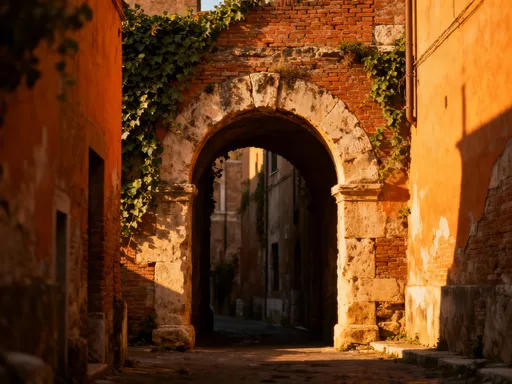
Luang Prabang isn’t just temples and markets—there’s a whole other side most travelers miss. I stumbled upon quiet alleyways, riverside nooks, and local life that felt untouched. These hidden theme areas—cultural, spiritual, natural, and artistic—offer a deeper connection to Laos. If you're looking for authenticity beyond the guidebooks, this is where the real magic happens. Let me take you through the side of Luang Prabang few ever see.
The Cultural Heartbeat Beyond the Old Town
While most visitors confine their exploration to the UNESCO-protected Old Town, where gilded temple spires rise above colonial facades, the true cultural heartbeat of Luang Prabang pulses in neighborhoods just beyond the main thoroughfares. Areas like Ban Phanom, situated a short walk from the city center, remain anchored in centuries-old traditions. Here, families gather in open-air homes where looms click rhythmically from dawn to dusk. Silk weaving is not a performance for tourists—it is a living inheritance passed from mother to daughter, each pattern encoding stories of village life, nature, and spiritual belief.
These communities thrive on quiet resilience. Unlike commercial craft shops that cater to souvenir seekers, family-run studios in Ban Xang Khong and Ban Thapene operate with purpose and pride. Visitors who take the time to walk these side streets often find elders grinding mulberry bark to make saa paper, a practice rooted in northern Lao tradition. The resulting handmade paper, textured and warm, is used for ceremonial scrolls, lanterns, and journals. To witness this process is to understand how culture is not preserved in glass cases but lived daily in the folds of ordinary life.
Yet these neighborhoods remain largely overlooked. Part of their preservation lies in their subtlety—there are no billboards, few signs in English, and little pressure to conform to tourist expectations. For the mindful traveler, this offers a rare opportunity: to observe without intrusion, to learn through presence rather than performance. Engaging respectfully means asking permission before photographing, speaking softly, and supporting artisans by purchasing directly. Community-based tourism initiatives, such as guided village walks led by local women, ensure that economic benefits stay within the community while deepening cross-cultural understanding.
By venturing beyond the postcard-perfect alleys, travelers gain insight into a way of life that values continuity over change. The cultural fabric of Luang Prabang is not static—it evolves gently, shaped by generations who choose to honor their roots even as the world around them shifts. To walk these streets is to step into a story still being woven, one thread at a time.
Spiritual Sanctuaries in Unexpected Places
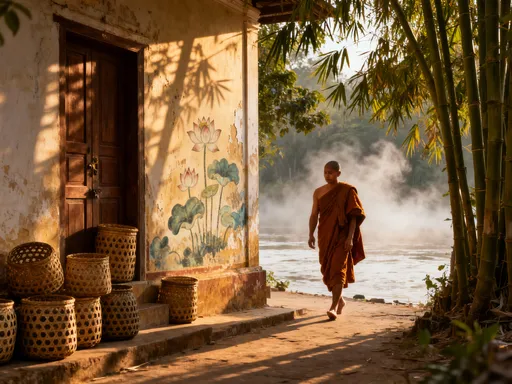
Each morning, as the first light spills over the Mekong River, a quiet ritual unfolds in neighborhoods far from the crowds. While tourists gather along Sisavangvong Road to observe the alms-giving ceremony, smaller, more intimate moments occur in tucked-away lanes where monks in saffron robes walk barefoot through residential areas. These lesser-known alms rounds, practiced in villages like Ban Sy and Ban Nong Hai, offer a more personal glimpse into the heart of Theravada Buddhism, which shapes daily life in Laos.
Unlike the choreographed scenes sometimes criticized for veering toward spectacle, these quiet offerings feel organic and reverent. Families place sticky rice, fruits, or simple curries into waiting alms bowls with bowed heads. There is no performance—only routine, humility, and continuity. For visitors, observing such moments requires discretion. Silence, modest dress, and a respectful distance allow one to witness without disrupting the sacred rhythm of dawn.
Beyond alms, smaller temples scattered throughout the city serve as spiritual sanctuaries for meditation and reflection. Wat That Luang, a modest temple near the northern edge of town, sees few foreign visitors but hosts morning chants led by elderly monks whose voices carry centuries of devotion. Similarly, the hilltop shrine of Wat Pa Huak, accessible via a shaded footpath, offers panoramic views not for photography, but for contemplation. These spaces are not designed for Instagram—they exist for stillness.
The contrast with major temples like Wat Xieng Thong is striking. While the latter dazzles with intricate mosaics and golden carvings, the smaller sanctuaries radiate a different kind of beauty—one rooted in simplicity and sincerity. Here, spirituality is not an exhibit but a practice. Visitors who seek connection over sightseeing often find that the quietest moments yield the deepest impressions. By choosing to visit these places with reverence, travelers honor not just the culture, but the very essence of mindfulness that defines Lao Buddhist life.
Nature’s Hidden Pathways Along the Mekong
Parallel to the Mekong River, a network of footpaths weaves through groves of frangipani, banana trees, and towering palms, offering a slower, more intimate way to experience Luang Prabang. These riverside trails, often unmarked and absent from maps, lead to secluded benches, fishing spots, and shaded clearings where local families gather at dusk. Unlike the bustling night market or the boat docks near the peninsula tip, these pathways invite quiet contemplation and a chance to sync with the river’s gentle flow.
One such route begins near Ban Chan, a village known for pottery, and follows the water’s edge past wooden stilt houses where children splash in shallow pools and elders mend fishing nets. The path narrows into a dirt trail flanked by wild herbs and flowering vines, eventually opening onto a grassy knoll where monks sometimes sit in meditation. At sunrise, mist rises from the river like breath, and the only sounds are birdsong and the occasional paddle dipping into the current. This is not nature as a backdrop—it is nature as a companion.
Travelers can access these trails on foot or by bicycle, the most respectful and sustainable way to explore. Early mornings are ideal, not only for cooler temperatures but also for encountering daily rhythms at their most authentic. Fishermen in long-tail boats glide past, their nets cast wide; women wash clothes on flat stones, their laughter echoing across the water. These scenes are not staged—they are fragments of a life lived close to the land.
To preserve the tranquility of these spaces, visitors should follow low-impact practices: avoid loud conversation, carry out all waste, and stay on established paths. The goal is not conquest but coexistence. When approached with care, these hidden pathways become more than scenic detours—they transform into bridges between cultures, offering a shared understanding of peace, patience, and the quiet dignity of rural life along the Mekong.
Artistic Expressions in Forgotten Alleys
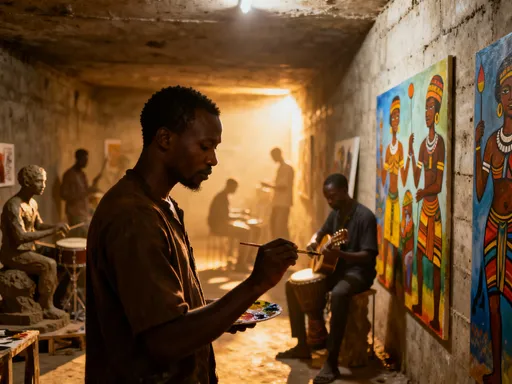
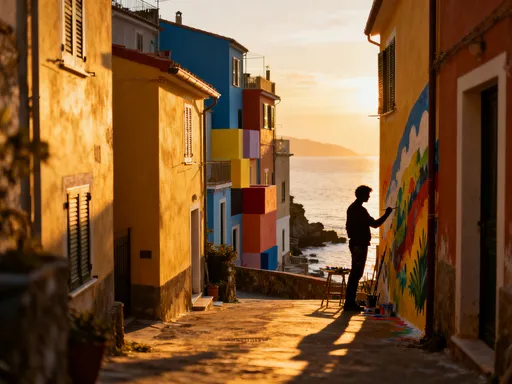
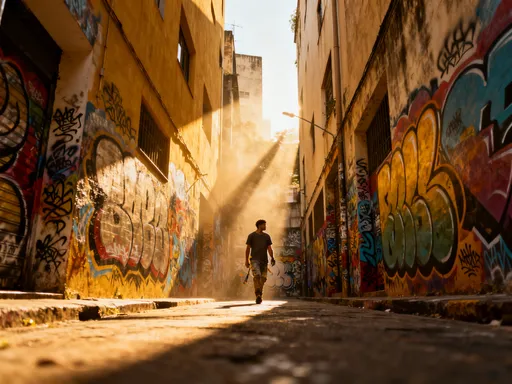
Amid Luang Prabang’s quiet lanes, a subtle artistic renaissance is unfolding—one that blends heritage with innovation. Tucked behind unassuming wooden doors, indie galleries and creative collectives are redefining what Lao art can be. In narrow alleys near the night market, murals painted in earth tones depict traditional motifs reimagined through modern eyes: spiraling naga serpents morph into abstract forms, while scenes of rice planting are rendered in bold, geometric strokes. These works are not tourist souvenirs; they are statements of identity.
Spaces like the Living Land Art Studio and the Mekong Art Project provide platforms for young Lao artists to experiment with mediums ranging from natural dyes to recycled textiles. Some use discarded fishing nets to create textured wall hangings; others transform old temple manuscripts into layered collages. These artists are not rejecting tradition—they are conversing with it, asking how ancient stories can speak to a new generation.
Street art, though still emerging, adds another layer to the city’s creative fabric. Unlike the graffiti-filled streets of larger Southeast Asian capitals, Luang Prabang’s murals are often subtle, appearing on the sides of community buildings or beneath temple eaves. Themes center on harmony—between people and nature, past and present, silence and sound. One striking piece near the foot of Mount Phousi shows a woman weaving, her thread extending into the sky, where it becomes a flock of birds. It’s a quiet metaphor for continuity and flight.
For visitors, discovering these artistic expressions requires curiosity and patience. There are no official tours, few signs, and little fanfare. But those who wander with open eyes may stumble upon open-studio nights, where artists serve herbal tea and speak softly about their work. These moments—unscripted and intimate—offer a rare form of cultural exchange, one that values listening as much as looking. In a city often praised for its stillness, art becomes another language of presence.
Culinary Journeys Through Local Markets and Homes
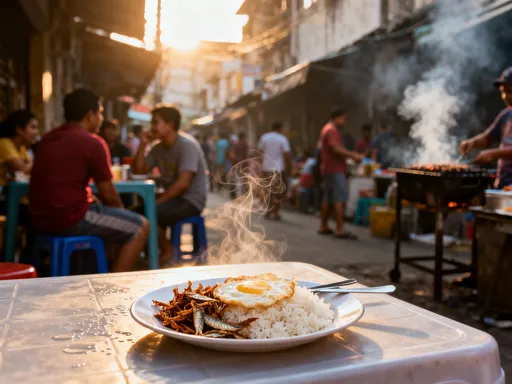
Beyond the stalls selling sticky rice and mangoes, Luang Prabang’s culinary soul hides in early-morning markets, backstreet kitchens, and family-run food carts that appear at dawn and vanish by midday. These are the places where Lao flavors are not adapted for foreign palates but celebrated in their full complexity. Dishes like or lam—a slow-cooked stew of herbs, eggplant, and buffalo skin—and jeow bong, a fiery chili paste made with fermented fish and roasted garlic, are staples of home cooking but rarely appear on tourist menus.
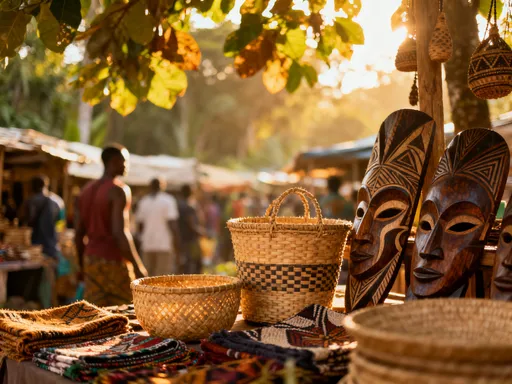
The morning market near the Mekong, active from 4 a.m. to 8 a.m., is a sensory immersion. Vendors arrange baskets of wild greens foraged from nearby hills, bundles of lemongrass, and trays of fermented bamboo shoots. Elderly women knead dough for khao nom kok, coconut-rice pancakes cooked in cast-iron molds over charcoal. The air is thick with the scent of roasted chilies and fish sauce, a reminder that Lao cuisine is built on balance—spicy, sour, salty, and umami in perfect tension.
For a deeper experience, some families now offer home cooking sessions, inviting travelers into their kitchens to learn recipes passed down for generations. These are not demonstrations in sterile studios but lived experiences: washing rice in clay basins, pounding herbs in stone mortars, and tasting as you go. One host in Ban Phanom teaches how to make khao soi, a northern Lao noodle soup distinct from its Thai namesake, simmered with turmeric and served with a side of raw vegetables and fermented soybeans.
Such encounters go beyond food—they are lessons in seasonal awareness, resourcefulness, and communal care. Ingredients are chosen based on what is available, not what is trendy. Leftovers are never wasted; meals are shared with neighbors. By participating, visitors don’t just learn to cook—they learn to listen to the rhythms of a household, to understand how food binds people together. In a world of fast dining and fleeting flavors, these moments offer something rare: nourishment of both body and spirit.
Choosing the Right Hidden Areas for Your Travel Style
Luang Prabang’s hidden corners are not one-size-fits-all. The city’s quiet offerings cater to different kinds of travelers, each seeking a unique form of connection. For the adventurer, secret trails along the river or village hikes to nearby waterfalls provide physical engagement with the landscape. These routes demand stamina and curiosity but reward with solitude and unfiltered views of rural life. For the culture seeker, workshops in silk weaving, paper making, or traditional cooking offer hands-on immersion, transforming observation into participation.
Those in search of peace may find their ideal retreat in the city’s lesser-known temples or riverside meditation spots. These spaces, free from crowds and commercialization, allow for introspection and a deeper understanding of Buddhist principles. A morning spent sitting quietly near Wat Aham, where monks chant in low, resonant tones, can be more transformative than any checklist of attractions.
Even within the realm of the hidden, balance matters. It is possible—and advisable—to pair well-known sites like Kuang Si Falls or the Royal Palace Museum with quieter explorations. A visit to the morning alms ceremony, for instance, can be followed by a walk through Ban Phanom to see weavers at work. This layered approach ensures that travelers honor both the iconic and the intimate, gaining a fuller picture of Luang Prabang’s identity.
Responsible visitation is key. Choosing to explore hidden areas should not mean exploiting them. Travelers must remain mindful of their impact: avoiding loud behavior, respecting private spaces, and supporting local economies directly. The goal is not to “discover” these places as if they were untouched, but to engage with them as honored guests. When approached with humility, even the most secluded spots can become spaces of mutual understanding.
Practical Tips for Discovering Luang Prabang’s Secret Layers
Uncovering Luang Prabang’s hidden dimensions requires more than a map—it demands intention. Start by slowing down. Rushing through the city ensures you’ll miss the quiet moments that define it. Stay in locally owned guesthouses or eco-lodges that prioritize community engagement. These accommodations often have staff who can recommend lesser-known spots or arrange introductions to artisans and home cooks.
Transportation should be gentle on the environment and respectful of local rhythms. Bicycles are ideal, allowing you to navigate narrow lanes and stop spontaneously. Tuk-tuks are convenient for longer distances but should be used thoughtfully—negotiate fares in advance and choose drivers who speak Lao, as they are more likely to understand cultural nuances and avoid inappropriate stops.
Timing is equally important. Visit markets at dawn, temples in the early morning, and riverside paths in the late afternoon when the light is soft and the heat has lifted. Avoid weekends at popular hidden spots, as increased attention has led to small surges in tourism even in previously quiet areas. Patience is essential—some experiences unfold slowly, like a grandmother teaching you to roll rice balls by hand or a monk sharing a proverb after meditation.
Hiring a local guide, especially one from a community-based tourism initiative, can transform a casual walk into a meaningful journey. These guides offer context, translate unspoken customs, and open doors that might otherwise remain closed. They also ensure that your presence contributes positively, directing spending toward families and cooperatives rather than external operators.
Finally, practice quiet awareness. Put away the camera sometimes. Listen more than you speak. Accept that not every moment needs to be captured or shared. The deepest connections are often wordless. As Luang Prabang continues to welcome travelers, the challenge—and the privilege—is to explore in a way that preserves its soul. The city does not need to be loud to be powerful. Its magic lies in the hush between footsteps, the space between breaths, the places where the real story unfolds.
Luang Prabang’s true beauty lies not in its postcard views, but in the quiet moments between them. By exploring these hidden theme areas, travelers gain more than memories—they build understanding. The city invites you not just to see, but to feel. And sometimes, the best journeys begin where the maps end.