You Gotta See These Hidden Viewpoints in Okinawa – Hiking Got Real Here
Hiking in Okinawa isn’t just about beaches and shrines—it’s a gateway to jaw-dropping viewpoints most tourists never see. I hit the trails across the island with nothing but my boots and a backpack, chasing sunrises, cliffside panoramas, and that quiet moment when nature steals your breath. From misty ridges to ocean lookouts carved by wind and time, these spots are real, raw, and totally worth the climb. This is not your average postcard scenery—this is Okinawa from the heights most people miss.
Why Hiking in Okinawa Surprised Me
When most travelers think of Okinawa, they picture white-sand beaches, coral reefs, and relaxed island vibes. And yes, those are real—but they only tell half the story. What surprised me most about hiking here was how quickly the coastal calm gives way to rugged inland terrain. The island’s spine, especially in the northern Kunigami region, is threaded with subtropical forest trails that rise into cool, misty highlands. These are not dramatic alpine peaks, but gentle yet persistent climbs through dense foliage, where every turn reveals a new layer of green, a hidden stream, or a sudden drop-off with views that stretch for miles.
The contrast with typical tourist experiences is striking. While resorts cluster along the southern and central coasts, the north remains quieter, more introspective. Hiking here feels like stepping into a different rhythm—one where the only sounds are wind through the trees, distant waves, and the crunch of volcanic rock underfoot. I found myself surprised by how remote some trails felt, even though I was never more than an hour’s drive from a town. The terrain is shaped by centuries of ocean winds, seasonal rains, and unique limestone formations, creating a landscape that’s both delicate and resilient.
What struck me most was the stillness. On a weekday morning hike near Hiji Falls, I didn’t see another soul for over an hour. The air was thick with humidity, but the shade of the canopy kept it bearable. Birds called from unseen perches, and the scent of wild ginger lingered in the breeze. It was in these quiet moments that I realized Okinawa isn’t just a beach destination—it’s a place of deep natural texture, where the land tells stories of erosion, resilience, and renewal. Hiking became my way of listening.
Mount Yonaha: The Island’s Highest Point and a View to Remember
At 503 meters, Mount Yonaha is the tallest peak in Okinawa, yet it remains surprisingly under the radar for many visitors. Located in the northern part of the main island, it’s a modest climb by mountain standards, but the journey to the summit is rich with atmosphere. The trail begins in a quiet forest clearing, marked by a simple wooden sign and a small offering shrine. From there, the path winds upward through a mix of broadleaf evergreens and native Ryukyu pines, with roots forming natural steps and occasional wooden railings for support on steeper sections.
The hike takes about 45 minutes to an hour at a steady pace, with elevation gain that’s consistent but not punishing. What makes it special is the gradual shift in perspective. At first, you’re surrounded by trees, but as you near the top, the canopy opens, and the horizon begins to appear in glimpses—patches of blue sea, distant islands, and the soft curve of the coastline. By the time you reach the summit, the view is expansive: on clear days, you can see across the Kunigami region, with Kouri Island to the west and the remote Iheya and Izena islands dotting the East China Sea to the north.
The summit itself is unspoiled—no cafes, no souvenir stands, just a simple stone marker and a small shelter with a bench. It’s a place to sit, breathe, and absorb the silence. I chose to hike at sunrise, starting in the dark with a headlamp, and arriving just as the first light touched the water. The sky shifted from indigo to gold, and the sea sparkled like crushed glass. It was one of those rare travel moments that feels almost sacred—a quiet triumph earned by effort.
For anyone planning this hike, timing is key. Early morning not only offers the best light but also cooler temperatures and fewer crowds. Pack light but smart: water, a snack, insect repellent, and a windproof layer are essential. The summit can be breezy even on warm days. Check the weather before you go—Okinawa’s humidity can make trails slippery after rain, and fog can roll in quickly, reducing visibility. But if conditions are right, Mount Yonaha delivers one of the most rewarding views on the island.
Cape Hedo: Where the Ocean Meets the Sky
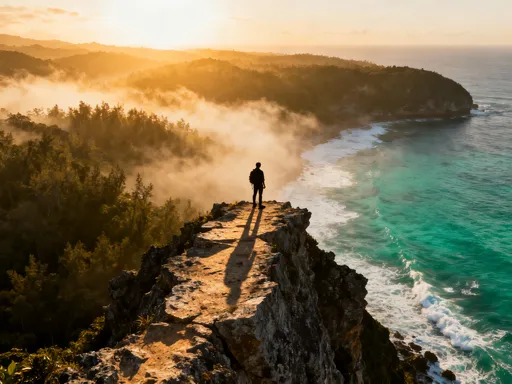
At the northernmost tip of Okinawa’s main island, Cape Hedo is a place where the Pacific Ocean and the East China Sea converge. It’s accessible by car, but the real magic lies in walking the coastal trails that flank the cape. The area is part of the Okinawa Coastal Greenway, a protected corridor of natural beauty that stretches along the island’s edge. Here, the landscape is shaped by wind and salt—gnarled trees grow at odd angles, and limestone cliffs rise sharply from the sea, carved into arches and caves by centuries of wave action.
The main trail is paved in sections but transitions into compacted gravel and dirt paths as you move closer to the cliffs. It’s an easy walk, suitable for all fitness levels, but the views are anything but ordinary. On one side, the ocean stretches to infinity, its color shifting from deep blue to turquoise depending on the light. On the other, wild grasses and seasonal blooms—like red ixora and yellow beach morning glories—add splashes of color to the rugged terrain. In late winter and early spring, the hillsides come alive with wild orchids and native cherry blossoms, a quieter, subtler bloom than Japan’s famous sakura but no less beautiful.
What makes Cape Hedo feel off-grid, despite its accessibility, is its sense of isolation. There are no large hotels or restaurants nearby, just a small observation deck, a lighthouse, and a few picnic tables. On a weekday afternoon, I had the entire cliffside to myself. The wind was strong, carrying the scent of salt and sea spray, and the sound of waves crashing below was constant. It was easy to imagine this place as it must have been decades ago—untouched, untamed, and full of quiet power.
Photographers will find endless opportunities here, especially at golden hour. The low angle of the sun turns the limestone formations into dramatic silhouettes and sets the water on fire with reflections. But even without a camera, the experience is profound. Standing at the edge of the cape, looking out at the meeting of two seas, you feel a sense of geographic finality—as if you’ve reached the edge of the world. It’s a reminder that Okinawa is not just a resort island, but a place where land and sea shape each other in real time.
Sefa-Utaki Trail: Spiritual Path with Coastal Vistas
In the southern part of Okinawa, nestled within the Churaumi Botanical Garden, lies Sefa-Utaki—a sacred site in the Ryukyuan spiritual tradition. Unlike the rugged northern trails, this hike is short and gentle, but deeply meaningful. The path is paved and well-maintained, winding through lush jungle-like vegetation toward a series of natural stone altars and clearings that have been used for centuries in rituals and prayers. Sefa-Utaki was once a place where priestesses communed with the gods, and the air still carries a sense of reverence.
The trail is less than a kilometer long, but every step feels intentional. Giant ferns arch overhead, and the sound of a nearby stream adds to the meditative atmosphere. As you approach the main clearing, the trees part to reveal a breathtaking view of the Pacific Ocean. The contrast is striking—ancient spirituality framed by endless blue water. It’s a place where nature and culture are inseparable, where the land itself is seen as sacred.
Visitors are asked to observe simple etiquette: speak quietly, refrain from loud conversations, and avoid touching the stone altars. Some people leave small offerings—flowers, stones, or folded paper—but the most important gesture is mindfulness. I visited early in the morning, just after the site opened, and had the entire path to myself. Sitting in the main clearing, listening to the wind and waves, I felt a deep sense of peace—a rare moment of stillness in a busy travel schedule.
For those interested in Okinawa’s cultural heritage, this trail is essential. It’s not just a scenic walk; it’s a journey into the island’s spiritual heart. The best times to visit are early morning or late afternoon, when the light is soft and the crowds are thin. Photography is allowed, but with respect—no flash near the altars, and no climbing on the sacred stones. This is a place to absorb, not to conquer.
Kunigami Village Forest Paths: Secret Lookouts Beyond the Map
Deep in the northern forests of Okinawa, away from the main roads and tourist signs, lie a network of lesser-known trails that lead to hidden lookouts. These paths are not always marked on standard maps, but they’re known to locals and outdoor enthusiasts who value solitude. The Kunigami region is home to some of the island’s most pristine forests, with trails that follow old footpaths once used by villagers and farmers. Today, they offer quiet access to elevated clearings with panoramic views of valleys, rivers, and the distant sea.
One such path begins near a small community center in the hills, marked only by a hand-painted sign in Japanese. The trail climbs steadily through dense undergrowth, crossing wooden footbridges over narrow streams and passing ancient camphor trees with trunks wide enough to shelter several people. After about 30 minutes, the path opens into a grassy clearing perched on a ridge. From here, the view is unobstructed: rolling green hills fall away to the east, and on clear days, you can see the coastline shimmering in the distance.
What makes these hidden lookouts special is their sense of discovery. There are no guardrails, no signs, no crowds—just nature in its raw form. I brought a small notebook and sat for nearly an hour, sketching the landscape and writing down thoughts. It felt like a privilege to be there, a reminder that not every beautiful place needs to be famous to be meaningful.
Exploring these trails requires a bit more preparation. A GPS-enabled map or local guide is helpful, as signage can be sparse. Stick to marked paths to protect the environment and avoid disturbing private land. Wear sturdy shoes—the terrain can be uneven, and roots or loose stones are common. And always carry out what you bring in. These forests are fragile, and preserving their quiet beauty is a shared responsibility.
Practical Tips for Hiking Safely and Respectfully in Okinawa
Hiking in Okinawa is accessible and rewarding, but it does require some preparation. The subtropical climate means high humidity year-round, with temperatures often in the 80s and 90s (Fahrenheit) even in winter. Lightweight, moisture-wicking clothing is essential, along with a wide-brimmed hat and sunscreen. Even on cloudy days, UV exposure can be intense, especially on open ridges and coastal cliffs.
Footwear matters. While some trails are paved or well-maintained, others are rocky, root-covered, or muddy after rain. Sturdy hiking shoes with good grip will make a big difference, especially on steeper sections like those near Mount Yonaha or Cape Hedo. Trekking poles can also help with balance and reduce strain on your knees during descents.
Hydration is critical. Bring at least one liter of water per hike, more for longer trails. There are few water refill points on remote paths, so plan ahead. Energy bars, fruit, or trail mix are good snacks to maintain stamina. Insect repellent is highly recommended—Okinawa’s forests are home to mosquitoes and, in some areas, ticks. Wearing long sleeves and pants can help, especially in dense vegetation.
Trail navigation is generally straightforward, with clear markers on popular routes. Yellow ribbons, numbered posts, or painted symbols are common. In more remote areas, a GPS app with offline maps—like Maps.me or AllTrails—can be a lifesaver. Always let someone know your plans, especially if you’re hiking alone.
Equally important is cultural and environmental respect. Many trails pass near sacred sites, private land, or protected habitats. Stay on designated paths, avoid picking plants or disturbing wildlife, and never leave trash behind. In spiritual areas like Sefa-Utaki, observe silence and follow local customs. These practices aren’t just about rules—they’re about honoring the island’s heritage and ensuring these places remain beautiful for future generations.
Why These Viewpoints Changed How I See Okinawa
Before I hiked these trails, I thought I knew Okinawa. I’d seen the beaches, tried the food, visited the museums. But walking these paths changed everything. I began to see the island not as a resort destination, but as a living, breathing landscape with depth, history, and quiet power. The viewpoints I reached weren’t just scenic—they were transformative. Each one offered a new perspective, literally and metaphorically, on what it means to truly experience a place.
Hiking taught me the value of slow travel. In a world of quick tours and photo ops, there’s something radical about walking for an hour to see a view no one else is rushing to capture. It forces presence. It builds connection. On the trail, you’re not just observing nature—you’re moving through it, feeling its rhythms, breathing its air. That physical engagement creates a deeper memory, one that stays with you long after the trip ends.
These trails also reminded me that beauty doesn’t have to be famous to be meaningful. Some of my most powerful moments happened in silence, on a rocky outcrop with no name, watching the sun dip below the horizon. There was no crowd, no social media post, just me and the land. In those moments, I felt a sense of gratitude—and a renewed belief in the power of exploration.
So if you’re planning a trip to Okinawa, I urge you: go beyond the beach. Lace up your boots. Follow the trails that rise into the hills. Let the island surprise you. Because the real Okinawa—the wild, quiet, breathtaking Okinawa—is waiting just off the beaten path. And it’s worth every step.