You Won’t Believe These Hidden Art Spots in Busan
When I first visited Busan, I expected beaches and seafood. But what truly blew me away were its secret art spaces—quiet galleries tucked in alleys, seaside murals that shift with the light, and studios where local artists still paint by hand. This isn’t just a port city; it’s a living canvas. If you’re looking for more than tourist traps, come with me. You’re about to discover a side of Busan most people never see.
Beyond the Postcards: Rethinking Busan’s Identity
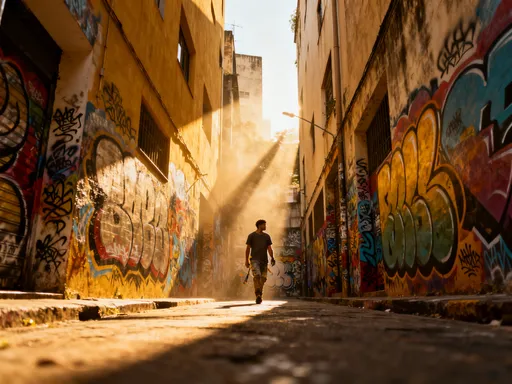
Busan is often introduced as South Korea’s second city—a coastal escape known for Haeundae Beach, fresh sashimi, and the backdrop of romantic K-dramas. Yet beneath this familiar image lies a deeper transformation, one driven not by tourism boards but by artists reclaiming forgotten corners. Once defined by shipbuilding and heavy industry, neighborhoods like Seomyeon and Dongnae have quietly evolved into cultural incubators. Abandoned warehouses now host pop-up exhibitions. Rust-streaked walls, remnants of a bygone industrial era, have become canvases for large-scale murals that speak of renewal and memory.
What makes this shift remarkable is its organic nature. Unlike curated art districts built for spectacle, Busan’s creative resurgence grew from necessity. In the 1990s, as shipyard jobs declined, communities began repurposing empty spaces. Artists, many trained in Seoul or abroad, returned to their hometowns seeking affordability and authenticity. They found inspiration in the city’s layered history—the echoes of postwar migration, the rhythm of tides, the textures of weathered concrete and sea salt. Today, walking through districts like Jwacheon or Beomil feels like flipping through a sketchbook where every page reveals a new artistic impulse.
The sensory experience of these spaces deepens the connection. In the early morning, the air carries a faint scent of turpentine from open studio windows. Sunlight glints off mosaic tiles embedded in alleyway steps. A breeze off the sea rustles through metal sculptures shaped like seabirds, their wings catching sound as much as light. This is art not confined to galleries, but woven into the city’s daily life. It invites slow exploration, rewarding those who pause to notice the detail—the hand-painted door number, the ceramic tile fish swimming up a staircase, the poem stenciled in Hangul across a storm drain.
The Village That Painted Itself: Gamcheon Culture Village Revisited
No discussion of Busan’s art scene is complete without mentioning Gamcheon Culture Village, a hillside neighborhood that has become both a symbol and a cautionary tale of artistic revitalization. Originally settled in the 1950s by refugees from the Korean War, the area remained isolated for decades, its narrow paths and steep stairs discouraging outsiders. In 2009, the city launched a regeneration project that invited artists to transform the area through color and creativity. What emerged was a breathtaking fusion of urban planning and grassroots artistry.
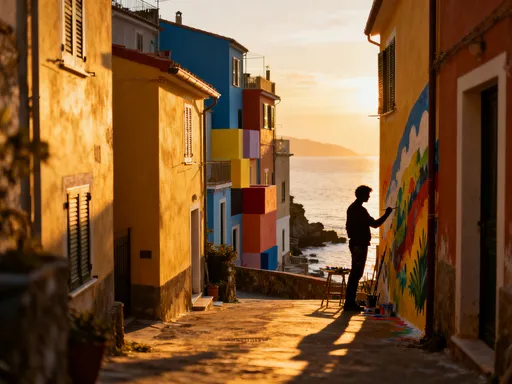
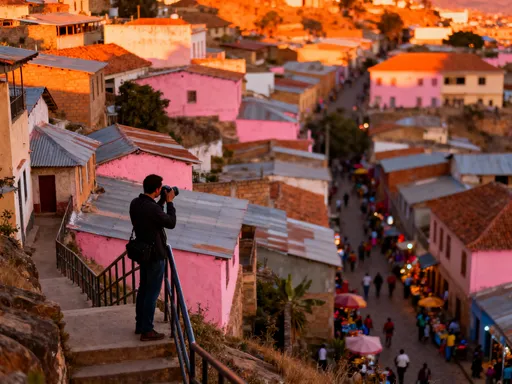
Today, Gamcheon is a labyrinth of vibrantly painted homes, each front door a unique expression. Some houses resemble giant storybooks, with scenes of children flying kites or cats riding bicycles. Others feature trompe-l'oeil windows that open onto imaginary seas. Embedded throughout are whimsical sculptures—a mailbox shaped like a fish, a bench carved as a giant book, a metal stork mid-flight. One of the most photographed pieces is the “Flying Hanbok,” a kinetic sculpture where fabric appears to flutter in the wind, suspended between two rooftops. It’s a poetic nod to tradition reimagined through modern art.
Yet popularity has brought challenges. On weekends, crowds spill through the alleys, turning quiet residential paths into bustling market lanes. Vendors sell handmade trinkets, and the scent of grilled skewers mingles with sea air. While this energy brings economic benefit, some longtime residents feel their community has become a stage set for tourists. For a more reflective experience, visitors are encouraged to arrive early—ideally before 9 a.m., when the morning light bathes the village in soft gold and the only sounds are birdsong and distant waves. On weekdays, it’s possible to wander without jostling, to pause at a small shrine tucked between houses, or to sip barley tea offered by an elderly resident curious about your journey.
Busan’s Underground Pulse: Studio Visits in Seomyeon and Jwacheon
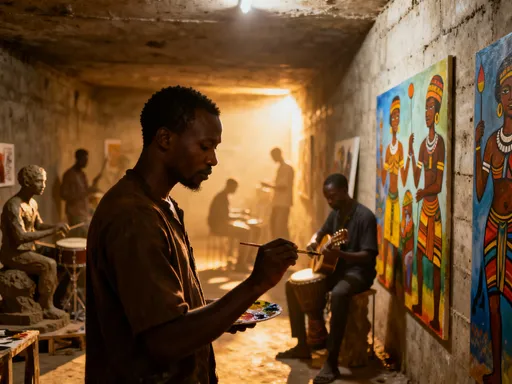
Beyond the well-trodden paths of Gamcheon, Busan’s true artistic heartbeat can be found in its independent studios—unassuming spaces tucked above cafés, behind laundromats, or in converted storefronts. In Seomyeon, the city’s bustling commercial center, a narrow staircase might lead to a second-floor printmaking workshop where artists use traditional baren tools to press ink onto handmade paper. In Jwacheon, a quieter neighborhood with a growing creative community, ceramicists shape delicate vessels inspired by coastal forms—waves, shells, and tidal pools.
These studios are rarely advertised. Many operate without formal websites, relying on word-of-mouth or seasonal open studio events to welcome visitors. When doors do open—often during the spring or fall art festivals—guests are invited not just to observe, but to engage. You might watch a textile artist dye silk using natural pigments extracted from local plants, or chat with a sculptor who repurposes driftwood collected from nearby beaches. The atmosphere is intimate, respectful, and refreshingly free of commercial pressure. There’s no obligation to buy; the exchange is often as simple as a shared cup of tea and a conversation about process and inspiration.
One such space is a collaborative print studio in Seomyeon where four artists share a sunlit loft. Their work blends traditional Korean motifs with contemporary abstraction—mountains rendered in geometric patterns, cranes reimagined as metallic silhouettes. During open hours, they demonstrate techniques like woodblock printing and screen printing, allowing visitors to try their hand at creating small keepsakes. These hands-on experiences deepen appreciation, turning passive observation into personal connection. For families traveling with children, such studios offer meaningful alternatives to crowded attractions, fostering curiosity and creativity in equal measure.
Seaside Canvas: Art Along the Coastline
Busan’s relationship with the sea is not just economic or recreational—it is deeply aesthetic. Along its extensive coastline, artists have responded to the rhythm of tides, the play of light on water, and the textures of rock and sand. At Gwangalli Beach, a popular evening destination, the nightly light show on the Diamond Bridge is complemented by a series of permanent installations. One notable piece is a spiral sculpture made of weathered steel, its curves echoing the movement of waves. As the sun sets, the metal glows amber, appearing to float above the sand.
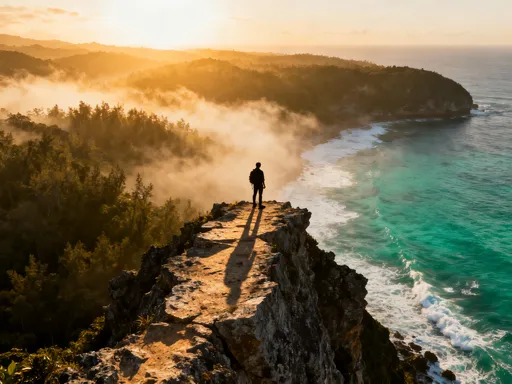
Further east, the Igidae Coastal Walk offers one of the most immersive art-nature experiences in the city. This scenic trail stretches along cliffs overlooking the East Sea, dotted with installations that blend seamlessly into the landscape. The “Oryukdo Skywalk” series—named after the six volcanic islets visible offshore—features a sequence of steel frames that frame specific views like living paintings. As you walk, each frame captures a different angle of the sea, sometimes isolating a single gull in flight, other times revealing the full sweep of horizon. The effect is meditative, encouraging stillness and contemplation.
Some of the most intriguing works are those affected by natural forces. A floating sculpture near Haeundae, composed of interconnected glass buoys, changes appearance with the tide. At high tide, it appears to drift on the surface; at low tide, it rests gently on exposed rocks, its colors intensified by direct sunlight. Similarly, a sand-engraved mural near Gijang is redrawn weekly by a local artist, its temporary nature underscoring the impermanence that defines coastal life. For the best viewing experience, plan your visit around sunset. The golden hour transforms the coastline into a dynamic gallery, where shadows lengthen, colors deepen, and the boundary between art and environment dissolves.
From Market to Mural: Art in Everyday Spaces
In Busan, art does not require a white-walled gallery. It thrives in the pulse of daily commerce, particularly in traditional markets where function and beauty coexist. Jagalchi Market, often called Korea’s largest seafood market, is a prime example. Beyond the stalls of glistening fish and steaming octopus, the upper floors and side alleys have become unexpected galleries. Murals depict generations of fisherwomen, their faces lined with sun and salt, carrying baskets of mackerel. Others celebrate marine life—schools of mackerel swirl across concrete walls, while a giant painted octopus seems to crawl up a staircase.
These artworks are not mere decoration. Many result from collaborations between local art schools and market vendors. Students from Dongseo University or the Busan College of Information Technology spend semesters documenting the market’s rhythms, interviewing elders, and translating stories into visual form. The process fosters mutual respect—vendors gain renewed pride in their work, while students learn the value of community-based art. During festivals like the Busan Biennale, temporary installations appear throughout the market: a soundscape of fish auctions played through hidden speakers, a fabric canopy dyed with squid ink, a poetry wall where customers can pin handwritten messages.
This integration feels authentic because it grows from lived experience. There is no sense of art being imposed; rather, it emerges from the space itself. Even the act of shopping becomes a sensory journey—your eyes move from the glint of silver fish to the shimmer of a mosaic wall, from the scent of brine to the sight of a painted crane taking flight on a shutter. For visitors, it offers a rare glimpse into how creativity can coexist with necessity, how beauty can arise not despite, but because of, the everyday.
Navigating the Scene: Practical Tips for Art-Focused Exploration
Exploring Busan’s hidden art spots requires a blend of planning and spontaneity. The city’s subway system is efficient and well-marked in English, making it easy to reach key areas. Line 1 connects major hubs like Seomyeon, Jagalchi, and Haeundae, while Line 2 reaches Gamcheon and Jwacheon. For coastal trails like Igidae, consider combining public transit with a short taxi ride or a rented bicycle. Busan’s bike-sharing program, Ddareungi, offers affordable access to sturdy, GPS-enabled bikes, ideal for leisurely rides along the beachfront promenade.
To make the most of your journey, carry a small notebook. Sketching a detail—a pattern on a ceramic bowl, the curve of a mural—deepens observation and creates a personal record. Jotting down artist names or studio locations helps support local creators, whether by visiting their websites later or recommending them to fellow travelers. Many artists welcome respectful photography, but always ask before taking pictures inside studios or of people. A simple smile and gesture of your phone often suffice to seek permission.
Timing matters. Weekdays, especially Tuesday through Thursday, offer quieter experiences at popular sites like Gamcheon or Jagalchi. Early mornings not only reduce crowds but also provide the best light for photography. If you’re interested in studio visits, check local event listings for open studio weekends, typically held in May and October. These events often include maps and shuttle services, making it easier to navigate lesser-known neighborhoods. Lastly, wear comfortable shoes. Busan’s hilly terrain and uneven alleyways demand sturdy footwear, particularly in Gamcheon, where steps are steep and surfaces can be slippery after rain.
Why This Side of Busan Matters: The Soul Behind the Surface
Beyond the aesthetic pleasure, Busan’s hidden art spaces speak to something deeper—the resilience of communities, the power of memory, and the quiet act of reimagining place. These are not sterile galleries designed for Instagram likes, but living spaces where art serves as both mirror and catalyst. In Gamcheon, murals honor the stories of displaced families. In Jwacheon studios, artists transform industrial decay into beauty. Along the coast, installations remind us of nature’s rhythms and our fragile connection to the sea.
For travelers, especially those in their 30s to 50s who value meaning over spectacle, these spaces offer a different kind of enrichment. They invite slowness, curiosity, and connection. They remind us that culture is not something to be consumed quickly, but lived and felt. A conversation with an artist, the texture of handmade paper, the way light shifts on a mural at dusk—these moments accumulate into a deeper understanding of a place.
Busan’s art scene also reflects a broader truth about urban life: that renewal does not require erasure. Old neighborhoods can thrive without losing their soul. Markets can evolve without becoming malls. The city’s creative energy is not about replacing the past, but honoring it through new expression. This balance—between tradition and innovation, community and individuality—is what makes Busan’s art so compelling.
Next time you’re in Korea, don’t just pass through. Step off the main streets, climb the quiet alleys, and let the city reveal itself in color and light. Look closely. Listen. Engage. In the quiet stories painted on the walls, in the studios where hands shape clay and ink, you’ll find not just art, but the enduring spirit of a city that continues to reinvent itself—one brushstroke at a time.