Lost in Time: Nuremberg’s Soul Lives in Its Stones
Walking through Nuremberg feels like flipping through the pages of a living history book. The city doesn’t just display its past—it wears it proudly in every timbered beam, ancient wall, and towering spire. From medieval fortresses to hidden courtyards, its architecture tells stories of resilience, creativity, and cultural fusion. I was stunned by how much emotion these structures convey—each corner holds a whisper of centuries gone by. This is not just sightseeing; it’s a journey into the heart of German heritage.
First Impressions: Stepping into a Storybook City
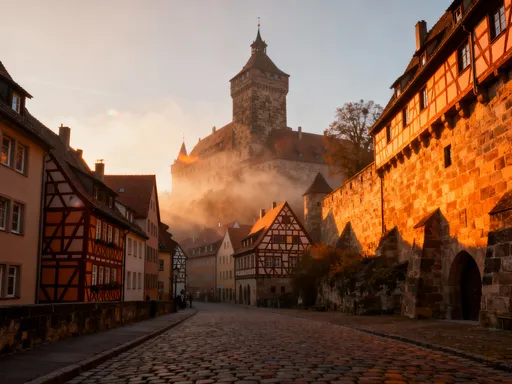
Nuremberg greets visitors with a skyline that seems drawn from the imagination of a medieval illustrator. The Altstadt, or Old Town, unfolds like a carefully preserved stage set where time has paused but not stopped. Cobblestone streets wind beneath overhanging half-timbered houses, their colorful facades tilted slightly forward as if leaning in to share secrets. Church spires rise above the rooftops like stone sentinels, guiding the eye toward the heavens. This is not a reconstructed tourist village, but a living urban center where history is not replicated—it is real, tangible, and deeply embedded in daily life.
The city's layout reflects a centuries-old tradition of urban planning rooted in trade, defense, and community. Tram lines follow paths once trod by merchants and craftsmen carrying goods through the Holy Roman Empire’s busiest corridors. The circular shape of the Altstadt, encircled by remnants of the 14th-century defensive walls, speaks to Nuremberg’s strategic importance as a free imperial city. Unlike many European capitals that expanded outward in radial patterns, Nuremberg grew organically within its fortified ring, preserving an intimate scale that invites exploration on foot.
Every architectural layer tells a story. Gothic arches frame Renaissance windows; Baroque gables sit atop medieval foundations. This architectural harmony did not happen by chance. After suffering extensive damage during World War II, Nuremberg made a deliberate choice to rebuild using original materials and traditional techniques. The result is a rare authenticity—few cities can claim such a continuous thread between past and present. Visitors walking through the Hauptmarkt or along the Pegnitz River are not merely observing history; they are moving through it, feeling the weight of centuries beneath their feet.
The Heartbeat of History: Nuremberg Castle and Its Legacy
Rising from a sandstone ridge at the center of the city, Nuremberg Castle stands as both a physical and symbolic anchor of German history. For over eight centuries, this fortress has watched over the city, serving as a residence for Holy Roman Emperors, a military stronghold, and a repository of imperial treasure. Its location was no accident—perched high above the surrounding landscape, it commanded visibility and control, a testament to the political power once concentrated here. Today, visitors climb the same stone steps once taken by emperors and diplomats, entering a world where architecture and authority were inseparable.
The castle complex comprises several key structures, each revealing a different facet of medieval life. The Palas, the imperial residential hall, showcases vaulted ceilings, grand fireplaces, and remnants of wall paintings that hint at the opulence once enjoyed by royalty. Nearby, the Deep Well, carved 50 meters into the rock, provided water during sieges and remains an engineering marvel. The Imperial Chapel, with its delicate stonework and serene atmosphere, reflects the spiritual dimension of imperial rule. Together, these elements form a portrait of a city that was not only politically significant but also culturally advanced.
Yet Nuremberg Castle does not stand in isolation from the darker chapters of history. Just a short distance away lies the site of the Nazi Party Rally Grounds, where mass gatherings distorted national pride into propaganda. This contrast is not ignored; instead, it is acknowledged as part of the city’s complex narrative. Museums near the castle include exhibits that explore both the medieval golden age and the 20th-century misuse of history. In doing so, Nuremberg demonstrates a rare maturity—preserving its heritage without romanticizing it, honoring the past while learning from its misuses.
Timbered Tales: The Magic of Fachwerk Houses
Wandering through Nuremberg’s side streets, one cannot help but be enchanted by the half-timbered houses known as Fachwerk buildings. These structures, with their exposed wooden frames forming intricate geometric patterns beneath white or pastel stucco, are more than picturesque—they are historical documents in wood and stone. Many date back to the 15th and 16th centuries, surviving fires, wars, and urban renewal thanks to meticulous preservation efforts. Each building carries the imprint of its original purpose, from merchant homes to artisan workshops, reflecting the city’s long tradition of craftsmanship and commerce.
One of the most famous examples is the Weißgerberhaus, or Tanners’ House, located along the Pegnitz River. Its name reveals its history: “Weißgerber” refers to white-tanned leather, a specialty of Nuremberg craftsmen who used alum instead of bark to preserve hides. The house’s design includes wide windows for natural light and large interior spaces for processing materials—practical features born from economic necessity. Other buildings feature carved figures in the wooden beams: saints, mythical creatures, or even playful depictions of daily life, each serving as both decoration and social statement.
The steeply pitched roofs, another hallmark of Fachwerk architecture, were designed for functionality—shedding snow and rain efficiently in Central Europe’s climate. Over time, these practical choices became aesthetic traditions, contributing to the city’s distinctive character. What makes Nuremberg’s preservation remarkable is its authenticity. Unlike some historic districts where facades are modern recreations, many of these houses remain structurally intact, with original beams and joinery. Walking through Weißgerbergasse, one of the best-preserved streets in the Altstadt, feels like stepping into a 16th-century guild district where time has not been frozen, but gently carried forward.
Sacred Spaces: Churches That Speak Across Centuries
At the spiritual and architectural heart of Nuremberg stand two Gothic masterpieces: St. Lorenz and St. Sebaldus. These churches are not merely places of worship; they are monuments to human aspiration, built to inspire awe and devotion through stone, light, and sound. St. Lorenz, constructed largely between the 13th and 15th centuries, boasts one of the most magnificent west façades in Southern Germany. Its twin towers frame a deeply recessed portal adorned with sculptures of saints and prophets, while the rose window floods the nave with colored light during morning hours.
Inside, the ribbed vaults soar to impressive heights, supported by slender columns that seem to dissolve into the ceiling. The acoustics, shaped by centuries of architectural refinement, make St. Lorenz a favored venue for sacred music performances, from Gregorian chant to Bach’s choral works. Equally impressive is the church’s collection of medieval art, including the Annunciation sculpture by Veit Stoss, a masterpiece of late Gothic wood carving that captures divine encounter with startling emotional depth.
St. Sebaldus Church, named after the city’s patron saint, presents a slightly different character—more fortress-like in appearance, reflecting its role as both a religious and civic center. Its interior houses the ornate Sebaldus Shrine, a bronze reliquary crafted over decades by Peter Vischer the Elder and his sons. This monumental work blends Gothic structure with early Renaissance detail, symbolizing the transition between eras. Like St. Lorenz, St. Sebaldus suffered severe damage during the 1945 bombings, yet both were painstakingly restored using original fragments and historical documentation. These reconstructions were not about replicating the past, but about restoring continuity—ensuring that future generations could experience the same sense of wonder that inspired their builders.
From Ashes to Art: Post-War Reconstruction and Identity
The year 1945 marked one of the darkest moments in Nuremberg’s long history. By the end of World War II, more than 90% of the Old Town lay in ruins, reduced to rubble by Allied bombing campaigns targeting industrial and transportation hubs. The destruction was catastrophic, but the response was resolute. Rather than embracing modernist redevelopment, which swept through many war-torn European cities, Nuremberg chose a different path: reconstruction rooted in historical fidelity.
Architects and city planners undertook a monumental task—rebuilding the Altstadt using pre-war photographs, archival blueprints, and surviving fragments. Traditional materials such as sandstone, timber, and hand-fired brick were sourced to match the originals. Skilled craftsmen revived nearly lost techniques in stonemasonry, carpentry, and stained glass restoration. Facades were reconstructed brick by brick, ensuring that the streetscapes retained their historic proportions and character. This effort was not driven by nostalgia alone, but by a profound belief that cultural memory resides in physical space.
The decision to rebuild authentically reflected a broader philosophical stance: that identity is tied to place. In contrast to cities that erased their past under the banner of progress, Nuremberg affirmed that healing comes not from forgetting, but from remembering with honesty. The reconstructed churches, market squares, and residential streets serve as living memorials—not only to what was lost, but to what endured. Today, the seamless integration of old and new allows visitors to experience the city as a continuous narrative, where every restored gable and repointed wall tells a story of resilience.
Hidden Layers: Courtyards, Walls, and Forgotten Corners
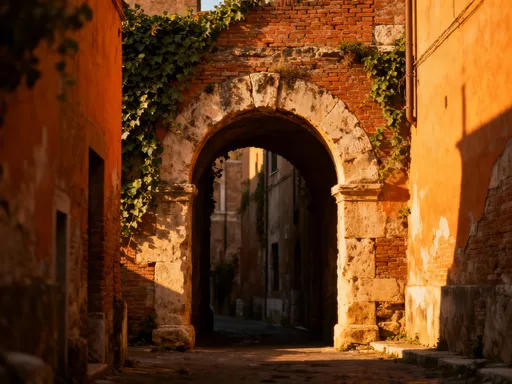
Beyond the well-trodden paths of the Hauptmarkt and the castle approach, Nuremberg reveals quieter, more intimate architectural treasures. Tucked between bustling streets are hidden courtyards—Höfe—once used by guilds, traders, and artisans for storage, workshops, and private gatherings. These secluded spaces, often accessible through narrow passageways or arched gateways, offer moments of stillness amid the urban rhythm. Some are adorned with climbing roses, ivy-covered walls, or fountains that echo with the sound of dripping water, creating microclimates of calm and reflection.
Equally compelling are the remaining sections of the medieval city wall, which once stretched over five kilometers around the Altstadt. Today, walking along the preserved stretches offers panoramic views of the city and a tangible sense of its former defenses. Watchtowers like the Luginsland and the Spiral Tower stand as reminders of a time when security depended on stone and vigilance. These structures are not isolated relics; they are integrated into the modern cityscape, with cafes operating within restored bastions and parks flourishing on former moat land.
Even the underground holds surprises. Beneath the market square, a network of vaulted cellars and passageways once stored beer, wine, and grain. Some of these spaces now host small museums or guided tours, revealing how medieval Nuremberg managed food preservation and trade logistics. Plaques mark former guildhalls and workshops, inviting passersby to imagine the sounds of hammering metal, weaving cloth, or bartering spices. These subtle layers transform a simple walk into a personal journey through time, where discovery is rewarded not with grand monuments, but with quiet details—a carved lintel, a weathered doorstep, a forgotten inscription.
Living Architecture: Culture Carved in Stone and Wood
What sets Nuremberg apart from many historic cities is that its architecture is not confined to museums or tourist zones—it is lived in, used, and celebrated as part of everyday life. The same buildings that once housed medieval tanners now contain cozy cafes, artisan boutiques, and family-run bakeries. The Hauptmarkt, famous for its Christmas Market, hums year-round with activity, where market stalls inspired by the Krämerbrücke in Erfurt offer local honey, handmade ornaments, and Nuremberg’s iconic sausages grilled fresh each morning.
Artisans continue to practice traditional crafts in centuries-old workshops, from goldsmithing to wood carving. The city’s commitment to preserving these trades ensures that heritage is not just seen, but experienced through touch, taste, and sound. Children learn about medieval engineering in interactive exhibits at the Germanic National Museum, while adults attend concerts in restored churches or sip coffee in courtyards that have hosted conversations for hundreds of years.
In Nuremberg, architecture is not a relic—it is a living language. The stones speak of emperors and craftsmen, of destruction and renewal, of pride and humility. They remind us that history is not something we leave behind, but something we carry forward in the spaces we inhabit. To walk through Nuremberg is to understand that identity is shaped not only by events, but by the places where those events unfolded. The city teaches us that preservation is not resistance to change, but a way of honoring continuity. As long as its walls stand and its people walk its streets, Nuremberg will remain a testament to the enduring power of place—a soul alive in its stones.